


Spring Count 2023
The Spring 2023 Migration Count has commenced and runs from Mar 1st to Apr 22nd with observers at the Mount Lorette site daily — including viewing equipment available to the public. If interested in visiting the site, we suggest that you visit after 3pm. We see the majority of the migrating eagles in the later afternoon. This is the 31st consecutive year of vigilant recording. Mount Lorette site, Observation map.
See the Spring Count 2023 Daily Summaries
Celebrating 30 Years of Citizen Science Golden Eagle Research
SUNDAY, OCTOBER 16, 2022
In-person and Zoom options available
The Rocky Mountain Eagle Research Foundation (RMERF) thanks all our observers, members, board, supporters, volunteers and countless visitors to the Mount Lorette Hay Meadows site for making the last 30 years a success. It was March 20, 1992 when Des Allen and Peter Sherrington first noticed Golden Eagles migrating along the portion of what was to become known as the “eagle highway” in the Kananaskis Valley.
Please join us at the Glenbow Ranch Provincial Park education building as we recognize and honour the 30 years’ achievement. We will listen and learn of many species migration history and challenges, related scientific findings and data, and highlights and passion of raptor watching and monitoring.
Schedule
- Glenbow Ranch is located on Highway 1A between Calgary and Cochrane, 18 kms NW from the U of Calgary. At the posted Glenbow Ranch signage, turn south (towards the Bow River), driving 3 kms down a good gravel road, parking available on site.
- WELCOME at Glenbow Ranch at 9:30 with a brief social gathering and light refreshments.
- OPENING PRESENTATION at 10:00 for in-person and Zoom attendees.
- MC Ian Sherrington with opening remarks.
- Video “The RMERF Story” produced by Quinlan McCormack
- Speakers 10:25 – 12:45
- Josh Welsh, Alberta Program Manager, Yellowstone to Yukon
- Ryan Schmitz, Raptor Resource Project, Decorah, Iowa
- Stan Boutin, Science Co-ordinator, Alberta Biodiversity Monitoring Institute, U of Alberta (in-person)
- Final introduction by Brian Keating
- Peter Sherrington, Research Director, RMERF (in-person)
- CLOSING REMARKS by RMERF President – Deanna Cottrell
Zoom attendees will then be disengaged.
Participants at the Glenbow Ranch’s presentations are invited to board a chartered bus (lunch to be provided) to go to the Mount Lorette Hay Meadow field site.
Live streaming will resume at 2:00 at the Mount Lorette Hay Meadow field site. Observers and other comments, as well as identification of flight/mountain directions of migratory Golden Eagles and other raptors, will be given.
This event is FREE, but registration is required. Please register with Sandy Graham at sandygraham1951@gmail.com
Advise if:
1 – attending in-person (# of attendees) at the Glenbow Ranch
2 – taking the bus (# of attendees) to Mount Lorette site (please specify if vegetarian option required)
3 – only participating on Zoom
Greater details will be provided to you from your registration.
RMERF is very pleased to advise that all these activities have been made possible by funding from the JerryLigouri Scholarship through HawkWatch International.
Fall Count 2022
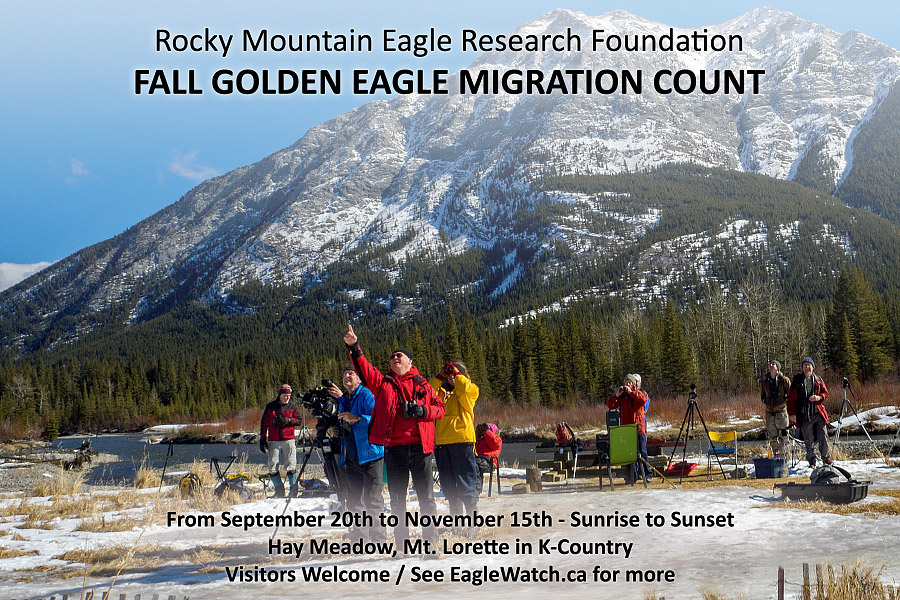
The Fall 2022 Migration Count was completed from Sep 20th until Nov 15th with observers at the Mount Lorette site daily — including viewing equipment available to the public. This is the 30th consecutive year of vigilant recording. Mount Lorette site, Observation map. Thank you to the observers and count coordinators.
See the Fall Count 2022 Daily Summaries
Spring Count 2022 Complete
The Spring 2022 Migration Count has commenced and runs from Mar 1st to Apr 22nd with observers at the Mount Lorette site daily — including viewing equipment available to the public. If interested in visiting the site, we suggest that you visit after 3pm. We see the majority of the migrating eagles in the later afternoon. This is the 30th consecutive year of vigilant recording. Mount Lorette site, Observation map.
RMERF in the News
Alberta’s Rocky Mountain Eagle Research Foundation reaches milestone in annual eagle count (March 17, 2022)
Dozens of volunteers spend their spring and fall in Kananaskis Country peering through binoculars and other telescopic lenses, searching the sky for migrating eagles.
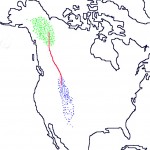
The migration route runs north from the United States along the Rocky Mountains, all the way up to the Yukon. It was discovered by chance in 1992 by Des Allen and Peter Sherrington. It became known as the ‘Eagle Highway.’
Strong updrafts are created in the area by the mountains and prevailing wind that mean the eagles don’t have to expend much energy to travel vast distances.
Golden eagle migration count (Calgary Eyeopener, March 18, 2022)
Interview on the Calgary Eyeopener with David Gray and Angela Knight.